
You notice a little blood when you floss, rinse, and get on with the evening. Then it happens again the next night, usually around the same back teeth. Although you may blame the floss or a tender spot, repeated bleeding often means the gums are inflamed.
At Overland Park Family Dental in Overland Park, Kansas, we can check what is happening around those teeth. Dr. Creighton Gallagher and our team look for bacterial buildup, swollen or bleeding gums, and changes in the support holding your teeth in place. From there, we can explain what your gums need and help with the parts of cleaning that have become difficult at home.
Bacteria Start the Inflammation
Plaque is a bacterial biofilm—a sticky layer of bacteria that forms on your teeth. When it collects along and beneath the gumline, your immune system sends cells and chemical signals to fight the bacteria. That reaction is called inflammation, and it can make the gums swell, turn red, and bleed more easily.
You may hear us call this the host response, which means your body’s response to the bacteria. While that response helps defend against infection, ongoing inflammation can also break down the fibers that connect teeth to the surrounding tissues and the bone supporting their roots. As a result, gum disease develops through the interaction between bacterial buildup and the way your body reacts to it.
Meanwhile, plaque that stays on teeth can absorb minerals and harden into calculus, also called tartar. Its rough surface holds more plaque, so new bacteria collect around the hardened deposits. Once tartar forms, a toothbrush and floss cannot remove it; we need professional instruments to clean it away.
Gingivitis Affects the Gums
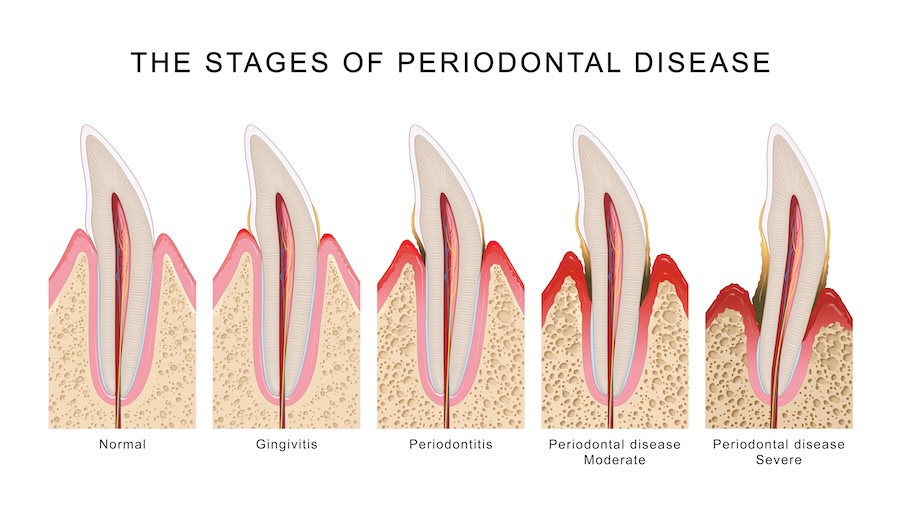
Gingivitis is the early stage of gum disease, when the gums are inflamed but the supporting bone and attachments have not been lost. You may notice bleeding when you floss or a swollen gumline around a tooth. Even so, your teeth may feel perfectly comfortable when you eat.
At this stage, removing plaque and tartar and improving daily cleaning can often allow the gums to recover. We can show you where buildup is collecting and how to reach it. If flossing around one particular tooth keeps making you wince, we can check that area and work through the technique with you.
Periodontitis Damages Tooth Support
Periodontitis is gum disease that has damaged the tissues and bone holding teeth in place. As those connections break down, the space between the tooth and gum can deepen into a pocket. Bacteria then collect farther beneath the gumline, where they are increasingly difficult to remove at home.
A toothbrush and floss cannot adequately clean the full depth of a pocket measuring five millimeters or more. You may be brushing twice daily and still have bacterial deposits deep in those spaces. Periodontal treatment—treatment for the tissues supporting your teeth—lets us reach those areas and reduce the bacteria keeping your gums inflamed.
Treatment helps preserve the support that remains, although lost bone and attachments do not simply return after a cleaning. Afterward, we check whether bleeding and swelling have decreased and whether the pockets have become shallower. Daily cleaning and ongoing professional care remain part of keeping the disease under control.
Your Health Affects Your Gums, Too
People can respond differently to similar amounts of bacterial buildup. Smoking can make gum disease more likely and interfere with healing, while inherited traits and certain health conditions can affect how strongly the body responds to bacteria. When we review your medical history, we are looking at factors that may change how your gums respond and recover.
The connection between your mouth and the rest of your body goes both ways. Diabetes, for example, can make gum disease more severe and slow healing, particularly when blood sugar is poorly controlled. In turn, ongoing gum inflammation can make blood sugar harder to manage, so keeping us updated helps us coordinate your dental and medical care when needed.
Medications can affect your mouth as well. Some reduce saliva, while others cause the gums to grow larger and create areas that are harder to clean. Bring an updated medication list, and mention changes you have noticed since starting a new prescription.
Watch for Bleeding, Recession, and Bite Changes
Bleeding during brushing or flossing is one reason to arrange an exam. You may also notice swollen gums, persistent bad breath, or a tooth looking longer. That longer appearance can happen with gum recession, which means the gumline has moved away from the crown and exposed more of the tooth or root.
Sometimes the change shows up at dinner instead. One tooth may feel loose, food may start catching in a new space, or your teeth may meet differently when you close. If that happens, contact us and avoid repeatedly pressing on the tooth to see whether it moves.
However, gum disease can progress with little discomfort. Your teeth may still handle meals normally while support is being lost beneath the gums. During your visits, we check those tissues for changes you cannot see or feel at home.
What We Measure During Your Exam
You may hear us calling out numbers as we check around each tooth. Using a small measuring instrument, we record the depth of the spaces between your teeth and gums in millimeters. Deeper readings can indicate pockets where bacteria and deposits collect beneath the gumline.
We also record bleeding and recession and check whether the tissues have lost their connection to the teeth. X-rays help us see how much bone surrounds the roots. Together, those findings show us where disease is present and how much support has been affected.
Once we have those findings, we can show you the areas that need care. For example, a deeper pocket behind a molar may explain why that spot keeps bleeding despite your efforts to clean it. We will explain whether your gums need routine cleaning, treatment beneath the gumline, or further evaluation.
How a Deep Cleaning Reduces Inflammation
When appropriate, we provide scaling and root planing, commonly called a deep cleaning. Scaling removes plaque and tartar from tooth surfaces above and below the gumline, while root planing addresses bacterial deposits and buildup on the affected roots. By reducing that bacterial load—the amount of bacteria present—we reduce the ongoing trigger for inflammation.
Depending on the areas involved, treatment may take more than one appointment. We may use local anesthesia to numb the areas while we clean beneath the gums. Afterward, your gums may feel tender and your teeth may be temporarily sensitive, and we will explain how to care for them as they heal.
We then check how the gums have responded, including whether bleeding has decreased and pockets have become shallower. If deeper areas remain inflamed, additional treatment or a referral to a periodontist may be needed. A periodontist is a dentist who specializes in treating the gums and supporting bone.
Why Maintenance Usually Comes Every Three to Four Months
Bacterial plaque begins forming again after treatment, including beneath the gumline. For patients with periodontitis, periodontal maintenance commonly occurs every three to four months. These appointments let us remove returning deposits, reduce harmful bacteria, and check whether inflammation is coming back.
During maintenance, we clean around the teeth and beneath the gums where needed, then monitor the tissues and bone supporting them. Meanwhile, brushing and cleaning between teeth help control the plaque you can reach at home. Regular professional care reaches areas your daily tools cannot fully clean.
If your current tools keep missing a space, bring that up during your appointment. We can demonstrate an interdental brush—a small brush designed to fit between teeth—or another cleaning method suited to the area. It is easier to practice with us than keep struggling with the same back tooth every evening.
Gum Disease Care in Overland Park, Kansas
If the same area keeps bleeding, your gumline has changed, or a tooth feels different when you chew, schedule a visit with us at Overland Park Family Dental. Dr. Creighton Gallagher and our team can examine your gums and explain what is happening beneath them. Bring your questions about the spots you struggle to clean—we can work through those with you, too.
You can also contact us if it has been a while since your last cleaning. We will check your gums, review your health history, and plan the care you need from there. We look forward to seeing you and helping you keep your teeth firmly supported for the meals and years ahead!