

A toothache has a way of getting your attention quickly. Sometimes the pain appears suddenly, while other times it begins as mild sensitivity that gradually becomes harder to ignore. Either way, tooth pain is usually the body’s way of signaling that something in the tooth or surrounding tissues needs attention.
Many people assume a toothache automatically means a cavity. Cavities are certainly one possible cause, but they are far from the only one. Tooth pain can develop for several different reasons, including infections, gum problems, grinding, or even sinus pressure.
At Overland Park Family Dental in Overland Park, KS, Dr. Creighton Gallagher helps patients determine where the discomfort is coming from and what treatment may be needed.
Understanding Tooth Anatomy
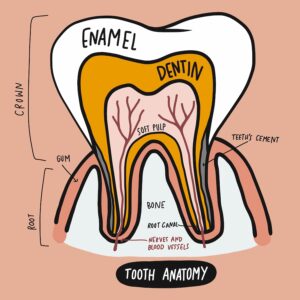
To understand why toothaches occur, it helps to know a little about how a tooth is built.
The outermost layer of the tooth is enamel, which is the hardest substance in the human body. Enamel protects the tooth from everyday forces such as chewing, temperature changes, and bacteria. Because enamel contains no nerves, very small areas of damage in this outer layer often do not cause pain at first.
Beneath the enamel lies dentin, a softer layer that contains microscopic tubules connected to the nerve of the tooth. When decay or wear reaches this layer, teeth often become sensitive to cold drinks, sweets, or air.
At the center of the tooth is the pulp, which contains nerves and blood vessels. When bacteria or inflammation reach this inner portion of the tooth, the pain often becomes more intense or persistent. This is why early dental problems may cause mild sensitivity at first, while more advanced issues can lead to stronger toothaches.
Tooth Decay
One of the most common causes of toothaches is tooth decay, also known as cavities. When bacteria in the mouth produce acids that weaken enamel, small areas of decay can form in the tooth. At first, the damage may be limited to the enamel, requiring only a small dental filling, and may not cause noticeable symptoms.
As decay progresses into the dentin layer, patients often begin to notice sensitivity to cold drinks, sweets, or pressure while chewing. If the decay continues deeper and reaches the pulp, the tooth may develop more significant pain or infection, and require a dental crown.
This is one reason dentists emphasize early treatment—addressing cavities before they progress deeper into the tooth often prevents more complicated problems or a dental emergency later.
Dental Infection or Abscess
If bacteria reach the pulp of the tooth, the result may be a dental infection, sometimes called a tooth abscess.
Because the pulp contains nerves and blood vessels, infection in this area can produce significant pain. Patients may experience throbbing discomfort, swelling in the gums, sensitivity when biting, or a bad taste in the mouth if drainage occurs.
Dental infections usually require prompt treatment to relieve pressure and eliminate bacteria. In many cases, root canal therapy can remove the infected tissue while preserving the natural tooth.
Gum Disease
Toothaches are not always caused by problems within the tooth itself. Gum disease can also lead to discomfort around certain teeth.
When plaque accumulates along the gumline, bacteria can irritate the gums and the tissues that support the teeth. This may cause redness, swelling, bleeding during brushing, or tenderness around the teeth. As gum disease progresses, infection can affect the bone and ligaments that hold the teeth in place, sometimes creating pain that feels similar to a toothache.
Cracked or Damaged Teeth
A cracked tooth can sometimes produce sharp or intermittent pain that is difficult to pinpoint. Small cracks in enamel may not always be visible, but they can allow pressure or temperature changes to affect the inner layers of the tooth. Patients often notice discomfort when biting down or when releasing pressure after chewing.
Because cracks vary in size and depth, a dental exam and imaging are usually needed to determine the best treatment approach.
Teeth Grinding
Grinding or clenching the teeth—often during sleep—can also contribute to tooth pain. This habit, known as bruxism, places repeated pressure on the teeth and surrounding muscles. Over time, grinding can wear down enamel, expose dentin, and create sensitivity.
Patients who grind their teeth may also notice jaw soreness, headaches in the morning, or flattened edges on their teeth. Dr. Gallagher often recommends custom nightguards to help protect teeth from this type of pressure.
Sinus Pressure
Occasionally, what feels like a toothache may actually be related to the sinuses. The roots of the upper back teeth sit close to the sinus cavities. When the sinuses become inflamed due to allergies or infections, pressure can build in that area and create discomfort that feels like it is coming from the teeth.
Some patients notice that the pain worsens when bending forward or moving their head. Sometimes, taking a decongestant medication such as Zyrtec-D or Claritin-D may reduce sinus pressure. If the tooth discomfort improves after taking one of these medications, it may suggest the source of the pain is sinus-related rather than a dental problem.
Toothache Evaluation at Overland Park Family Dental in Overland Park, KS
Toothaches can develop for several reasons, and the source of the pain is not always obvious without an examination. Identifying the cause early allows dentists to address the problem before it becomes more serious.
At Overland Park Family Dental in Overland Park, KS, Dr. Creighton Gallagher evaluates tooth pain by examining the teeth, gums, and surrounding structures to determine what may be causing the discomfort. Once the cause is identified, an appropriate treatment plan can be recommended to relieve pain and restore oral health.
If you are experiencing a toothache or dental discomfort, scheduling an appointment at Overland Park Family Dental in Overland Park, KS can help determine the source of the problem and provide the care needed to restore your comfort.